
You fight in turn-based battles where you can save up a turn to use later or borrow future turns to attack multiple times in a row, gambling that you can survive being defenseless afterward. A flexible job system lets you mix and match combat roles as you level up. It rewards planning ahead and taking risks at the right moment, making random encounters feel more like puzzles than filler.
Gameplay video
More Bravely Default II gameplay on YouTube →Ready to play Bravely Default II?
Grab a physical or digital copy from Amazon — prices and availability update live.
This is an affiliate link. As an Amazon Associate we earn from qualifying purchases, at no extra cost to you.
Screenshots & review notes
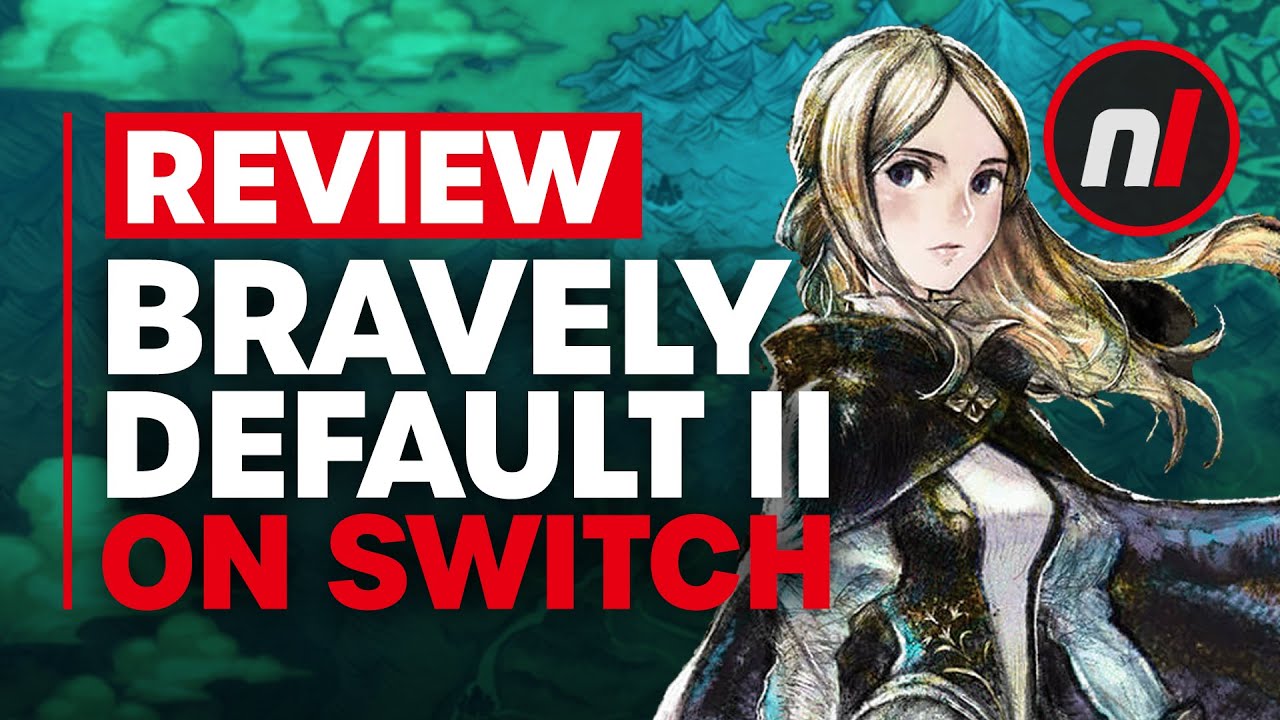
The short version
It's a comfort-food JRPG that leans hard on job-system nostalgia, and while its story is forgettable, the combat systems underneath are sharp enough to carry it.

In the hands
The brave and default mechanic, banking or borrowing turns, injects real risk-reward tension into fights that would otherwise feel standard.

Look and sound
Character and environment art has a painterly, storybook quality, though some texture work looks noticeably flatter up close than the character models suggest.

The long haul
Recommended for fans of classic job-system RPGs like Final Fantasy V. The plot and characters are thin enough that story-focused players may lose interest.
Frames captured from the gameplay video above; notes are our own take on the game.
What it's like to play
You lead a small party of adventurers shipwrecked in a land governed by four elemental crystals, and battles use a turn-based system where choosing to Default has your character defend and save up an extra turn for later, while choosing Brave lets you spend saved turns to act multiple times in a single round, sometimes at the risk of leaving yourself with no defense the following turn. Your party can equip Jobs, over twenty of them found and unlocked throughout the story, each granting a distinct set of abilities like a black mage's elemental spells or a vanguard's tanky front-line skills, and mixing a primary job with a secondary one lets you build genuinely unusual character combinations. Boss encounters called Asterisk holders each guard a specific job and require you to learn their pattern of attacks before you can beat them and unlock that job for your own party.
Your goal is traveling between four interconnected nations, helping restore balance to each region's crystal while recruiting new party members and Asterisk holders along the way, with side quests scattered through each town offering small character stories and rewards. A full playthrough runs somewhere around forty to fifty hours if you chase job mastery and side content, and difficulty rises noticeably at points where the game expects you to have leveled up specific jobs rather than just your characters overall. Equipment in this version also factors in weight, so loading a character down with too much heavy gear can slow them down in battle, giving min-maxers something extra to fuss over.
The main story and characters land as fairly predictable compared to the original Bravely Default, which longtime fans of that first game commonly point out as a step down in writing. Dungeons themselves are visually plain, and grinding specific jobs up to unlock their strongest abilities can take real time. If what you care about most is a deep, flexible job system layered onto satisfying turn-based combat, the mechanics here carry the game a long way even where the story falls short.