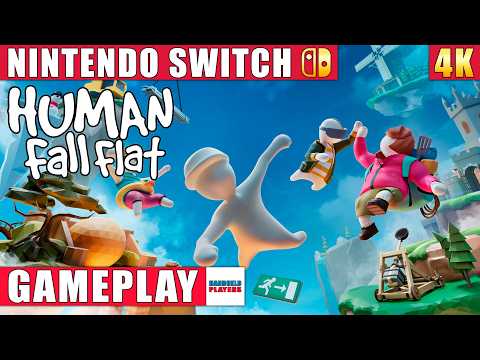
You control a wobbly, loosely animated character with clumsy arms, trying to climb, push, and carry your way through open physics-based levels. Nothing about the controls is precise on purpose, so slipping off a ledge or dropping something at the wrong moment is part of the fun rather than a failure. It plays best with friends who can laugh along at the chaos together.
Gameplay video
More Human: Fall Flat gameplay on YouTube →Ready to play Human: Fall Flat?
Grab a physical or digital copy from Amazon — prices and availability update live.
This is an affiliate link. As an Amazon Associate we earn from qualifying purchases, at no extra cost to you.
Screenshots & review notes
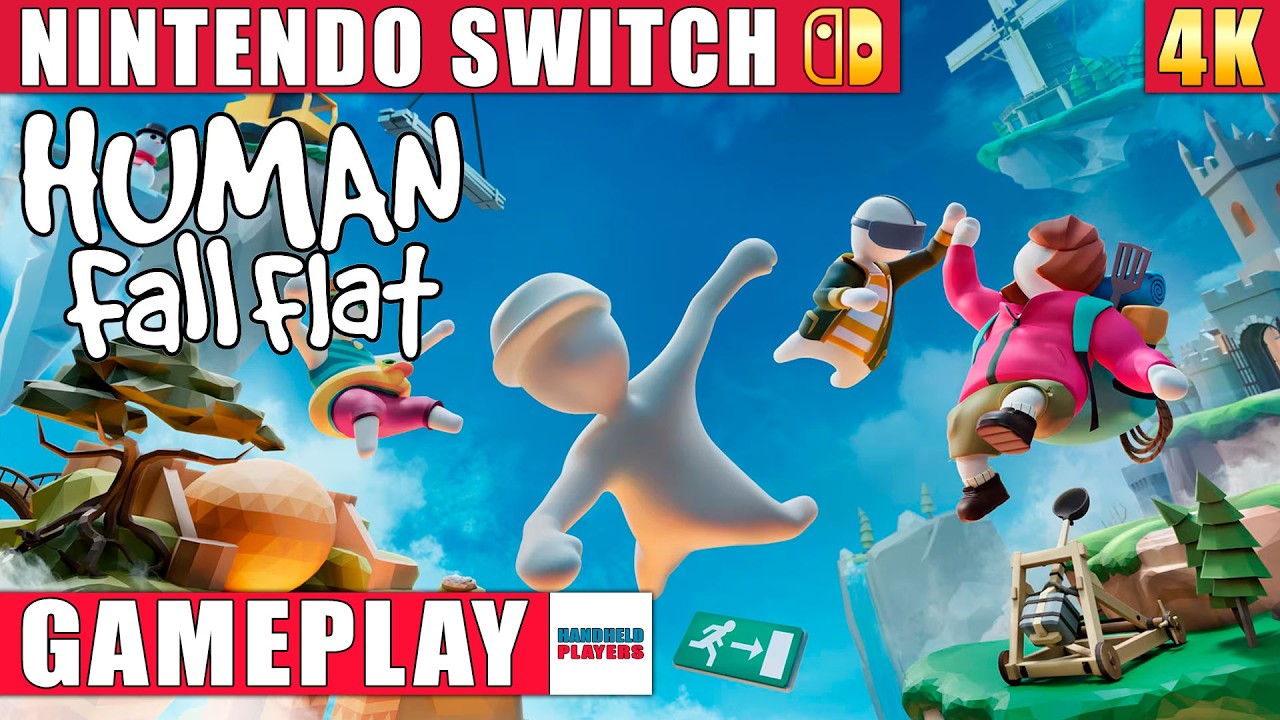
Overall
A goofy physics playground that thrives on its own clumsiness, turning failure into the actual point of the experience.

Moment to moment
Deliberately loose controls make simple tasks hilariously difficult, generating constant slapstick moments rather than frustration.

Art and atmosphere
Its plain, dreamlike level design leans into surrealism rather than detail, which suits the tone perfectly.

Worth your time?
Best enjoyed with friends rather than alone, where the chaos of miscommunication becomes the real appeal; solo play wears thin faster.
Frames captured from the gameplay video above; notes are our own take on the game.
What it's like to play
You control a soft, doughy character with loose, floppy arms, and every action, from walking to grabbing a ledge, is handled with clumsy, realistic physics rather than smooth animations, which is the entire joke of the game. One button makes each hand grab whatever it touches, and moving while holding onto something can swing, climb, or drag objects around, and the controls are intentionally a little unwieldy so that even simple tasks like climbing a ladder can turn into a small disaster. Your first ten minutes in a dreamlike, floating level will likely involve falling off something, laughing about it, and trying again with slightly better control of your grabby hands.
Most of your time is spent solving physical puzzles scattered through strange, dreamlike levels, like finding a lever to open a gate or stacking crates into a makeshift staircase, and because the physics are so loose there are often several unintended ways to solve the same puzzle, including some that clearly were not planned by the developers. Playing with up to seven other people turns every puzzle into a chaotic group effort of dropped objects and accidental shoves, and this cooperative chaos is where most of the entertainment comes from. A full solo playthrough of the main levels takes several hours, though community-made levels extend this considerably.
Session to session it thrives on the accidents, watching a friend's character get flung across a gap by a poorly timed shove is often funnier than solving the puzzle correctly. What may frustrate newcomers is that playing entirely alone loses much of the comedy and can feel merely repetitive, and the loose controls that are funny in a group can be genuinely annoying when a puzzle actually requires precision. If you have a group of friends to play with, this delivers reliable laughter, but it is a much quieter experience solo.