
You explore a paper-craft town and its surroundings, talking to eccentric folded-paper characters and helping them with small tasks. Battles happen on a stage in front of a cheering audience, and timing your button presses during attacks and blocks affects how much damage you deal or avoid. It keeps its jokes and light tone throughout, making it an easy, story-driven RPG to sit with over a few sittings.
Gameplay video
More Paper Mario: The Thousand-Year Door gameplay on YouTube →Ready to play Paper Mario: The Thousand-Year Door?
Grab a physical or digital copy from Amazon — prices and availability update live.
This is an affiliate link. As an Amazon Associate we earn from qualifying purchases, at no extra cost to you.
Screenshots & review notes
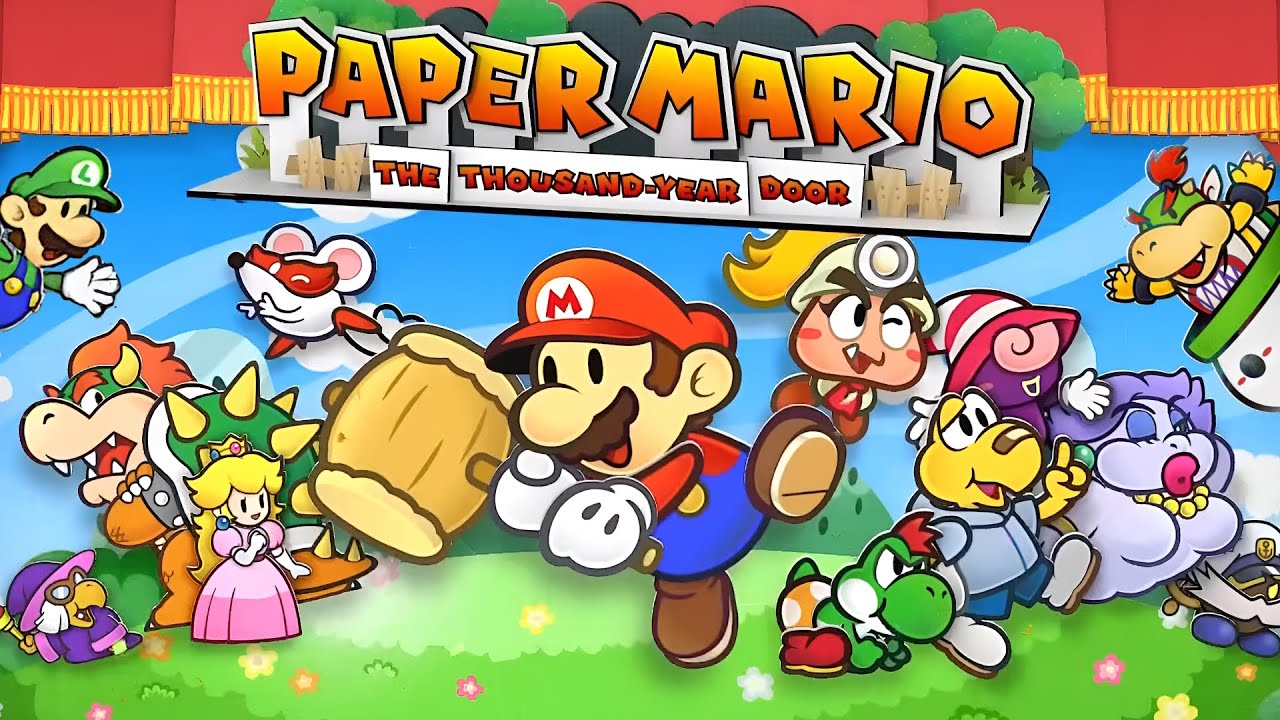
Overall
Returning to this GameCube classic confirms what fans always said: it's the best Paper Mario, full stop, and this remake barely touches what made it great.

Moment to moment
Turn-based battles with timed button presses and an audience that reacts to your performance still feel wonderfully tactile, never once feeling dated.

Art and atmosphere
The paper-diorama aesthetic has been sharpened and brightened without losing its handmade charm, and the localization's jokes land as well as they did two decades ago.

Worth your time?
An easy recommendation for RPG fans and newcomers alike, thanks to approachable difficulty and a generous badge system. Just don't expect much has changed structurally from the original.
Frames captured from the gameplay video above; notes are our own take on the game.
What it's like to play
You start out as Mario in a rundown port town called Rogueport, and the first thing you notice is that everyone here is flat, like a piece of paper cut into a person. You walk around with the stick, hop on enemies with A, and swing your hammer with B, and soon you find a magic door that pulls you into a stage-play battle screen complete with a curtain, spotlights, and an audience that cheers or throws things at you. Fights are turn-based: you pick attack or item from a menu, but you also press a button at the exact moment you hit or get hit, which either boosts the damage or blocks it. A talking book explains the story, that a legendary treasure lies behind a thousand locked doors, and a badge system lets you swap in new moves as you find them.
Most of your time goes toward chapters, each one a self-contained adventure in a new location like a jungle village, a haunted mansion, or a wrestling arena, where you recruit a new partner character who has their own field ability, such as a flying paperfan-bug or a floating shadow girl who lets you pass through walls. You solve simple puzzles by turning sideways to slip through gaps, folding into a paper boat to cross water, or curling into a tube to roll through pipes, then fight your way to a boss with a defined weakness. Chapters take a few hours apiece and the whole story runs somewhere in the twenty to thirty hour range, with the difficulty staying gentle until an optional super-hard basement dungeon late in the game.
Session to session it feels like reading a funny, warmly written book that occasionally asks you to fight something, since the jokes and character writing carry as much weight as the combat. One chapter involves a lot of backtracking across the same map hunting a hidden villain, which can wear thin if you dislike repetition. If you enjoy turn-based fights with a timing trick, likeable oddball characters, and a story with real heart under the jokes, this is a comfortable, funny way to spend a few weeks.