
By day you go to high school and build friendships that make your abilities stronger, and after midnight your character climbs a towering, ever-changing dungeon fighting monsters in turn-based battles. Managing your energy and choosing who to spend time with each evening becomes as important as the fighting itself. It has a heavier, sadder tone than the rest of the series, so expect a somber story rather than a purely fun one.
Gameplay video
More Persona 3 Portable gameplay on YouTube →Ready to play Persona 3 Portable?
Grab a physical or digital copy from Amazon — prices and availability update live.
This is an affiliate link. As an Amazon Associate we earn from qualifying purchases, at no extra cost to you.
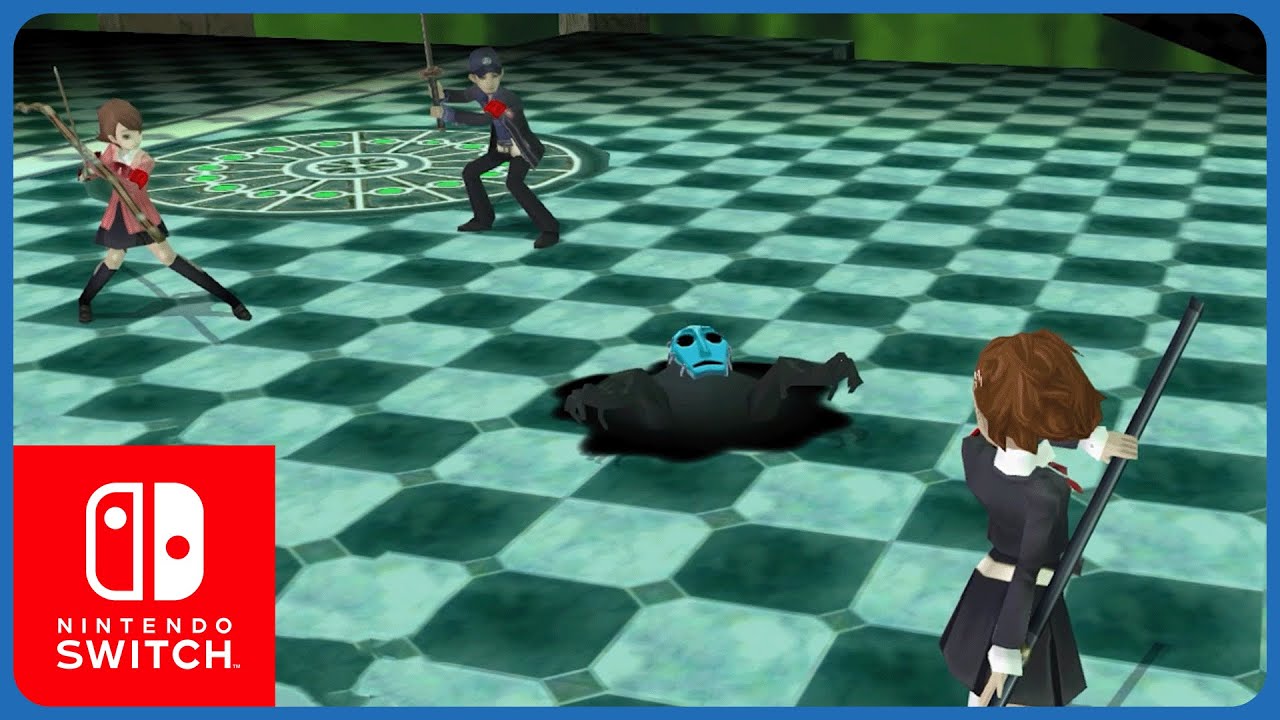
Screenshots & review notes
The verdict
It is bleaker and rougher around the edges than its sequels, but that rawness is exactly why longtime fans hold it so dear. The ending still lands like a gut punch.

The mechanics
Tartarus repeats its floors more than modern entries would dare, and the grind can wear thin, yet the tension of nighttime exploration never really fades.

Presentation
This port keeps the moody, melancholic tone intact with updated visuals that never sand off its distinct late-2000s style. Performance on Switch is solid throughout.

Staying power
It lacks some quality-of-life features later games introduced, so newcomers may want to start elsewhere, but series veterans owe it a playthrough for the story alone.
Frames captured from the gameplay video above; notes are our own take on the game.
What it's like to play
You control a Japanese high school student who transfers to a new school and slowly discovers there is a secret hour at midnight when the world turns green, coffins replace people, and monsters called shadows roam free. Most of the game alternates between two modes: during the day and evening you walk around town on a menu-driven map, choosing where to go and who to hang out with, and at night you enter Tartarus, a single towering dungeon that climbs higher the further you get. Combat is turn-based, you pick attacks from a menu, and finding a shadow's elemental weakness knocks it down and lets your team pile on for a big combined attack.
Your actual goal is to keep climbing Tartarus over the course of a full school year while also building friendships called social links, each one a short recurring conversation with a classmate or neighbor that unlocks over several meetings. Time is the resource you are managing, an evening spent studying is an evening not spent with a friend or resting for the next dungeon crawl, and the calendar keeps ticking whether you use it well or not. Runs into Tartarus get harder the deeper you go, with tougher shadows and a full moon boss fight roughly once a month that can genuinely kill your whole party if you are underleveled.
A typical session is part quiet slice-of-life conversation, part methodical dungeon floor by floor, and the tone shift between the two is part of the appeal. What may frustrate you is that you cannot directly command your teammates, they act on their own AI logic, so watching an ally waste a turn on the wrong move happens often. This suits people who like slow-burn stories with a large cast and do not mind a dated, menu-heavy interface, and it rewards patience more than quick reflexes.