
Two older Mario adventures brought to the new console, where you run around tiny round planets with gravity that flips as you jump between them. You swing from star to star, spin to knock enemies away and float through space between challenges. They are famous for their orchestral music and are gentle enough for younger players.
Gameplay video
More Super Mario Galaxy 1 + 2 gameplay on YouTube →Ready to play Super Mario Galaxy 1 + 2?
Grab a physical or digital copy from Amazon — prices and availability update live.
This is an affiliate link. As an Amazon Associate we earn from qualifying purchases, at no extra cost to you.
Screenshots & review notes
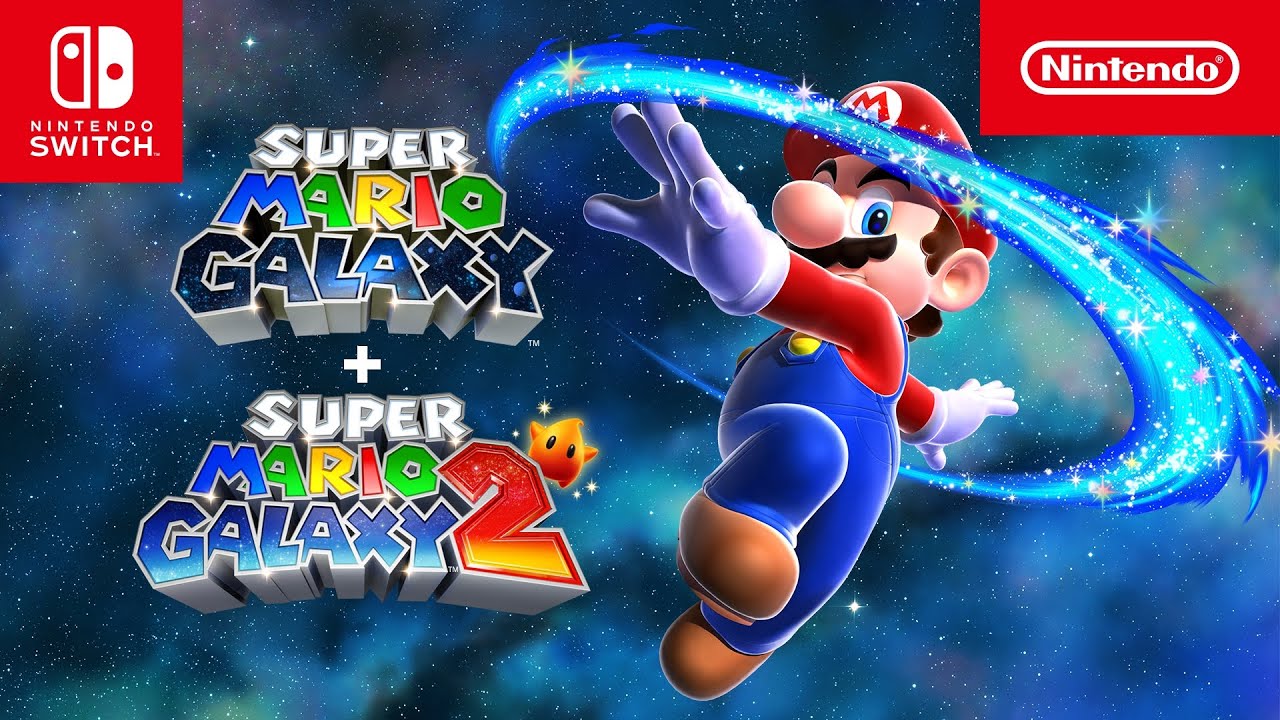
Overall
Two much loved older adventures hold up well on the new console and remain some of the gentlest 3D platforming around. Some players may notice the age of the games in how simple certain levels feel by today's standards.

Moment to moment
You run around tiny round planets with gravity that flips as you jump between them, swinging from star to star and spinning to knock enemies away. Levels are short and clearly signposted.

Art and atmosphere
The orchestral music is a genuine highlight and the space settings still look charming rather than dated. Visuals are simple and colourful rather than highly detailed.

Worth your time?
Short stages make this easy to dip into for a few minutes at a time. It suits younger players and anyone easing into 3D platformers more than veterans wanting a tough challenge.
Frames captured from the gameplay video above; notes are our own take on the game.
What it's like to play
You run and jump as Mario across small round planets, and gravity bends around each one so what looks like walking upside down or sideways from a distance just feels like normal walking once you are standing on it. The stick moves him, one button jumps, and a spin move performed with another button knocks nearby enemies away or breaks open certain blocks, and you use that spin constantly since it also helps you recover height mid jump. Within the first few minutes you will likely leap off one tiny planet into open space, fly briefly, and land on another, which is the basic rhythm the whole game is built around.
The goal on each stage is to reach a star hidden somewhere among these small worlds, sometimes by simply walking to the end of a path and sometimes by solving a small puzzle involving the planet's shape or gravity. Later stages combine several planets into one obstacle course, asking you to jump from one gravity field to another without falling into empty space, and the challenge grows more from careful platforming than from tough enemies. Both games included here are on the easier end for genre veterans but still ask for a steady hand with the jump timing.
A session breaks naturally into bite sized stages that usually take five to fifteen minutes each, which makes it easy to play in short bursts. The orchestral music and bright, calm presentation make it a comfortable choice for younger players or anyone easing into video games for the first time. The one drawback is that camera angles around round planets can occasionally make it hard to judge exactly where a jump will land, which causes the odd unfair feeling fall.