
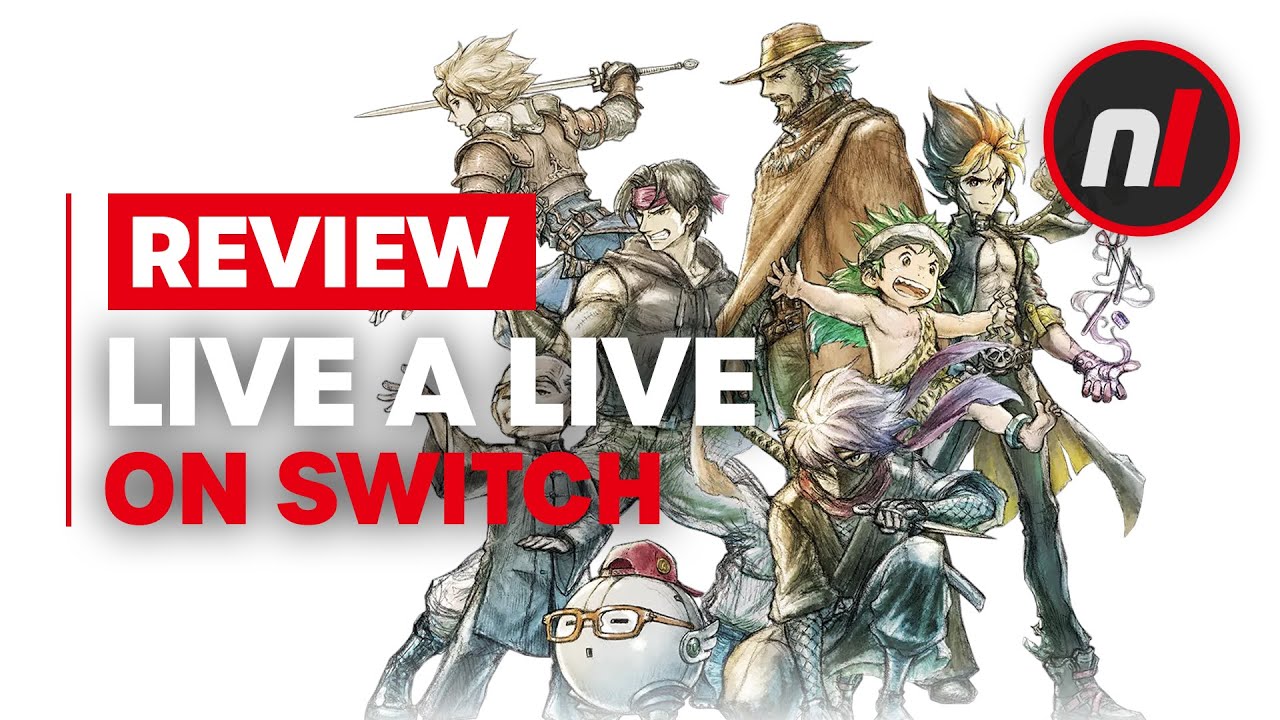
You play through seven unconnected stories set in wildly different time periods, from prehistoric times to a science fiction future, and each one has its own distinct art style and way of playing, from stealth to straightforward brawling. All seven eventually connect into one final chapter. Jumping between such different styles keeps things fresh, though it also means you may like some chapters far more than others.
Gameplay video
More Live A Live gameplay on YouTube →Ready to play Live A Live?
Grab a physical or digital copy from Amazon — prices and availability update live.
This is an affiliate link. As an Amazon Associate we earn from qualifying purchases, at no extra cost to you.
Screenshots & review notes
Overall
This remake rescues a genuinely experimental SNES cult classic, and its willingness to break RPG conventions across seven wildly different eras still feels fresh decades later.

Moment to moment
Each chapter reinvents its gameplay, from stealth to a horror dungeon crawl, keeping the pace brisk since no single style overstays its welcome.

Art and atmosphere
The HD-2D visuals give every era its own distinct palette and mood, backed by a genuinely varied soundtrack that shifts tone as sharply as the settings do.

Worth your time?
A great pick for RPG fans wanting something structurally unusual and bite-sized in its chapters. The wildly different quality between segments means not every story lands equally.
Frames captured from the gameplay video above; notes are our own take on the game.
What it's like to play
You pick from seven short, self-contained stories set in wildly different time periods, from a caveman era with no written language to a wandering ninja mission to a lonely spaceship, and each one drops you into a completely different style of play built for that setting, so a caveman story might rely on smell and simple actions while a martial arts story focuses on training up specific moves against rival students. Movement uses the stick to walk around on a grid, and combat happens on that same grid, with your characters and enemies occupying specific squares, so where you stand relative to an enemy actually determines whether an attack lands or whether an area attack catches you in its blast. Because each story is short, usually a couple of hours, you get introduced to and finish an entire arc of characters and mechanics far more quickly than in a typical RPG.
Your overall goal is working through all seven independent stories at whatever order you like, after which a final chapter draws characters and threads from every earlier tale into one connected conclusion that recontextualizes what came before. Combat throughout stays grid-based with attacks that have visible ranges and shapes you need to line up carefully, along with charge times on stronger moves that reward patient positioning over button mashing. A full playthrough of all seven stories plus the finale runs around twenty hours, which is fairly compact for the genre, and a striking twist partway through one particular chapter has become one of the most talked about moments among longtime fans.
Because each story is short and distinct, some naturally land better than others depending on your taste, and the individual combat systems stay fairly simple rather than deeply complex. The twist chapter mentioned above remains divisive even among people who like the rest of the game. As a genuinely unusual anthology of short RPG stories brought back with lovely new visuals and voice acting, it rewards curiosity more than most games in the genre.