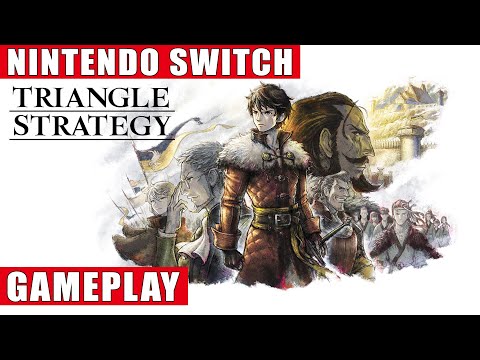
You lead a small group of soldiers in grid-based battles, using height and terrain to land stronger hits, while story scenes ask you to weigh in on hard choices that your allies then vote on. Conversations and political maneuvering take up as much time as the fighting does. It moves slowly and expects you to read a lot of dialogue, so it fits patient players more than those chasing constant action.
Gameplay video
More Triangle Strategy gameplay on YouTube →Ready to play Triangle Strategy?
Grab a physical or digital copy from Amazon — prices and availability update live.
This is an affiliate link. As an Amazon Associate we earn from qualifying purchases, at no extra cost to you.
Screenshots & review notes
Overall
It's a dense, talky strategy game that trusts players to sit through political intrigue as much as combat, and that gamble mostly pays off for patient audiences.

Moment to moment
Battles reward using elevation and terrain cleverly, while the voting mechanic for major story choices makes decisions feel genuinely weighty rather than cosmetic.

Art and atmosphere
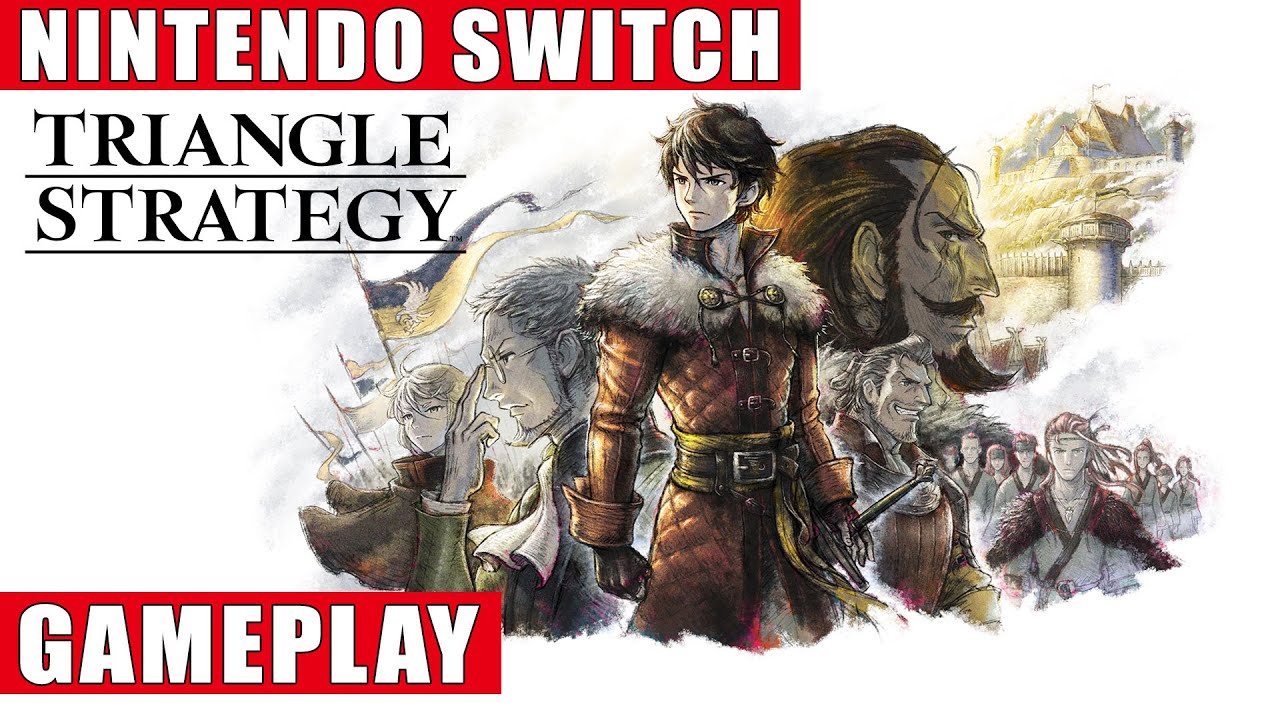
The HD-2D visuals suit the somber, medieval-fantasy tone well, aided by a moody orchestral score that underlines the story's heavier themes.

Worth your time?
Best for strategy fans who don't mind lengthy cutscenes and dialogue-heavy pacing. Those wanting fast, punchy combat sessions may find the pacing a slog.
Frames captured from the gameplay video above; notes are our own take on the game.
What it's like to play
You control a small group of soldiers on grid-based battle maps, moving each character a limited distance per turn and choosing whether to attack, use a skill, or reposition for an advantage like higher ground or a flanking attack from behind an enemy. Outside of battle, the story unfolds through lengthy dialogue scenes as you navigate a fractured kingdom's politics, and periodically the game pauses to let you and your council vote on a major decision, tallying not just what you choose but how it affects three tracked values representing your reputation for utility, morality, and liberty. Those values quietly shape which version of the story continues to play out, sometimes splitting the plot in ways you will not fully see until much later.
Your goal across each chapter is winning a specific battle scenario, often with unusual objectives like protecting a fleeing convoy rather than simply defeating every enemy, and terrain effects like wet ground that can be frozen solid or ignited add tactical wrinkles on top of standard positioning. Each character has a fixed role rather than a flexible job you can reassign, so learning what your archer, healer, or heavy knight is actually good for becomes part of the strategy. A full playthrough runs somewhere around thirty five to fifty hours depending on how much dialogue you sit through, and a second playthrough is practically necessary to see the full range of branching story paths and endings.
The story sequences between battles are long and dense with political dialogue, which will test players hoping for a faster pace or more frequent fights. Compared to some tactics games, battles happen less often here, though each one tends to be carefully designed rather than filler. For players who want a tactics game wrapped around a genuinely consequential, thoughtfully written political story, this is one of the strongest recent examples of that combination.