
The upgraded version of the sequel, with sky islands and a huge underground world, running faster than it did before. You glue objects together to build carts, boats and flying machines, and the improved performance helps when your contraption is on fire and falling apart. Save files carry over if you played the earlier release.
Gameplay video
More The Legend of Zelda: Tears of the Kingdom Nintendo Switch 2 Edition gameplay on YouTube →Ready to play The Legend of Zelda: Tears of the Kingdom Nintendo Switch 2 Edition?
Grab a physical or digital copy from Amazon — prices and availability update live.
This is an affiliate link. As an Amazon Associate we earn from qualifying purchases, at no extra cost to you.
Screenshots & review notes
The verdict
The added sky islands and underground world make this feel like a much bigger adventure, and the smoother performance helps a lot. Newcomers might still find the sheer scale a little overwhelming at first.

The mechanics
You glue objects together to build carts, boats and flying machines, and the extra speed helps when your contraption is already on fire and falling apart. Save files from the earlier release carry over.

Presentation
The world layers a bright surface, a floating sky and a dark underground, each with its own mood and music. It stays colourful and readable even during busy moments now that it runs faster.

Staying power
There is enormous room to explore and build for dozens of hours. It suits patient players who enjoy experimenting more than those who want to be told exactly what to do.
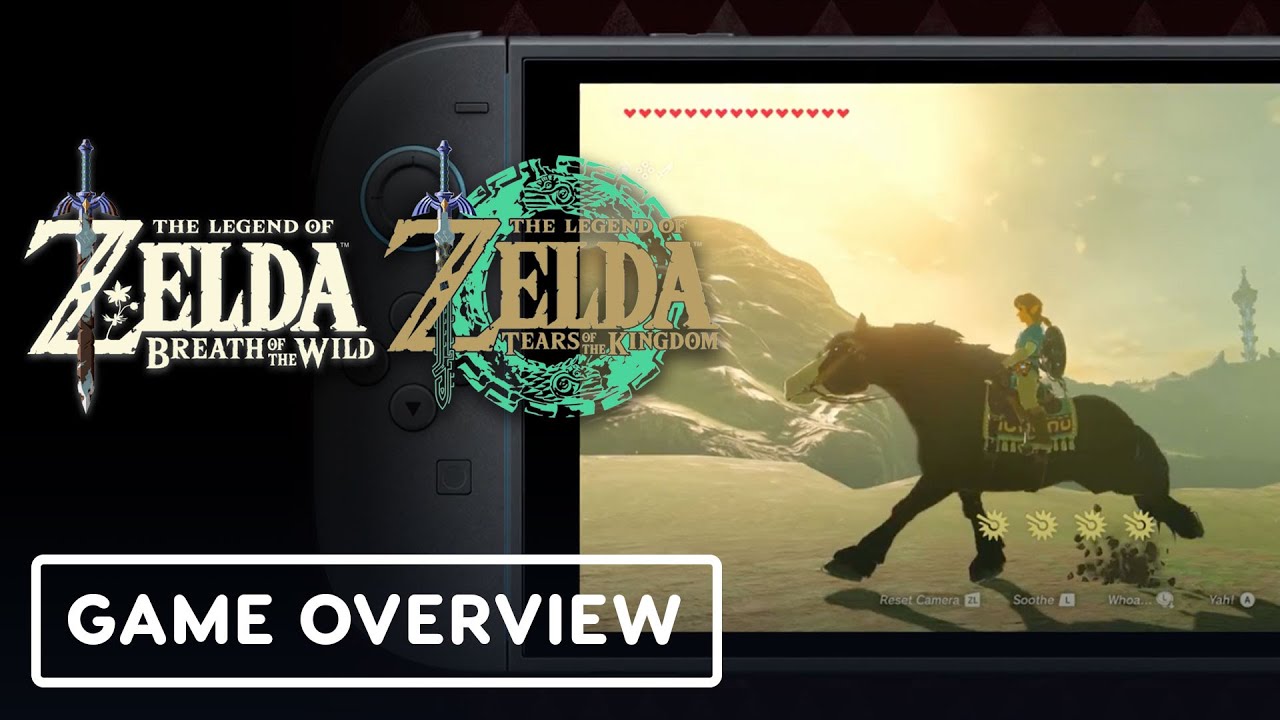
Frames captured from the gameplay video above; notes are our own take on the game.
What it's like to play
You begin high in the sky rather than on the ground, drifting past floating islands before dropping down into the same green countryside from the earlier game, now cracked open with chasms leading to a dark underground layer beneath it. Movement is the same climbing, running, and gliding as before, but you gain a new ability to fuse objects together, so early on you might tape a rock to a stick to make a hammer, or bolt a fan onto a plank to make a crude boat, using one button to grab pieces and another to stick them together. It takes a few tries to understand that almost anything lying around, from tree branches to abandoned wheels, can become a building block, and the game leaves you to experiment rather than explaining every combination.
The overall goal is again to push back a rising darkness, but your daily time goes into smaller tasks, gluing together a vehicle to cross a gap, diving underground to find rare materials, or climbing a sky island to see what is up there. Building gets more elaborate as you unlock more attachable parts, and puzzles increasingly expect you to combine two or three ideas rather than one. The improved performance on this hardware means your homemade cart or glider holds together visually even in busy scenes, which matters since half the fun is watching your invention wobble across a canyon without falling apart.
Sessions tend to stretch long because one dive underground or one building project always leads to another idea worth trying. It suits someone who enjoyed the earlier game and wants to see where the same world goes next, and save files from that release carry over so you are not starting from nothing. The main frustration is that the building system has a real learning curve, and your first few attempts at a vehicle will likely fall apart or drive nowhere near where you intended.